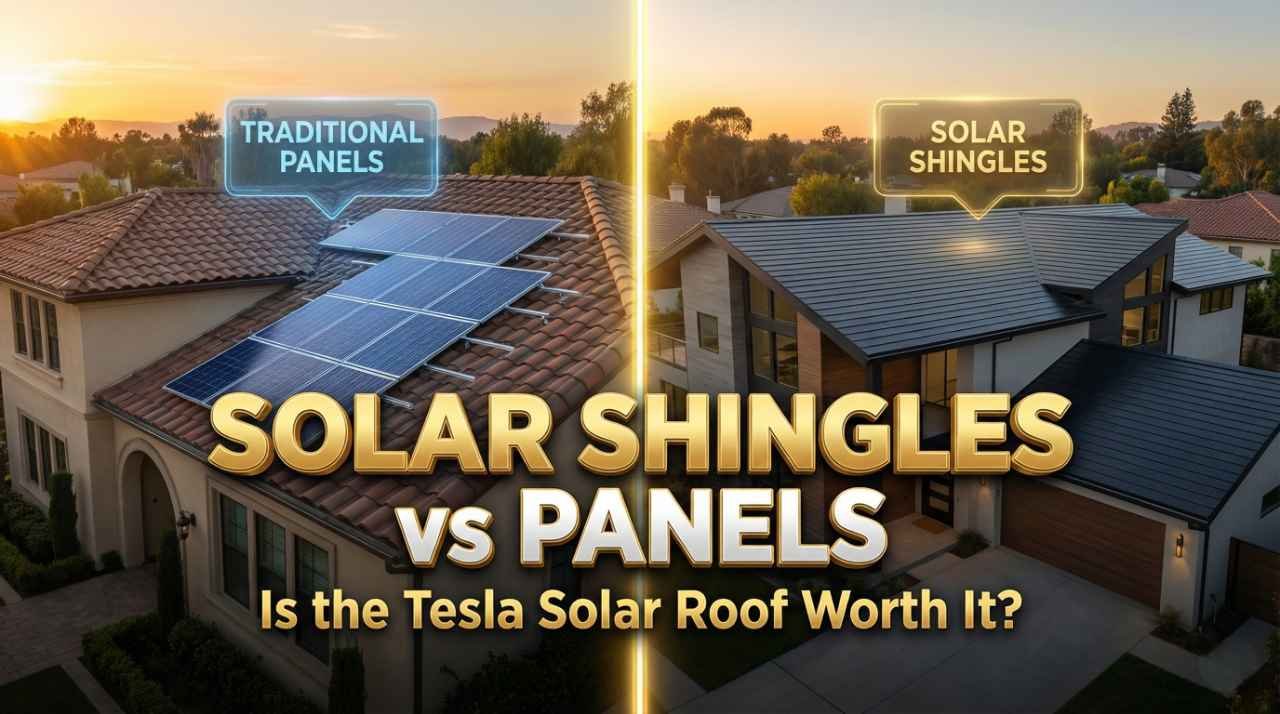
Solar Shingles vs. Solar Panels: Which Option Wins in 2026?
For decades, if you wanted to go solar, you had one choice: bolt large, rectangular panels onto your existing roof. While effective, let’s be honest—they aren’t always pretty.
Enter Solar Shingles (also known as Solar Roofs). Popularized by the Tesla Solar Roof and brands like GAF Energy, these sleek tiles function as both your roof and your power generator.
But is this new technology worth the premium price tag? In 2026, the battle of Solar Shingles vs. Traditional Panels comes down to three things: Aesthetics, Cost, and Efficiency.
1. What Are Solar Shingles?
Unlike traditional panels that are mounted on top of your roof, solar shingles are the roof. They are a type of Building-Integrated Photovoltaic (BIPV) material.
From the street level, they look like high-end slate or asphalt tiles, but they contain photovoltaic cells that generate electricity. They offer a seamless, invisible look that many luxury homeowners prefer.
2. Cost Comparison: The Price of Beauty
This is the biggest differentiator. Solar shingles are significantly more expensive than traditional panels.
- Traditional Solar Panels:
- Average Cost: $18,000 – $28,000 (before incentives).
- Installation: Takes 1-3 days.
- Best for: Homeowners who want maximum ROI and don’t mind the look of panels.
- Solar Shingles (e.g., Tesla Solar Roof):
- Average Cost: $40,000 – $70,000+ (depending on roof size).
- Installation: Takes 1-2 weeks (involves tearing off the old roof).
- Best for: Homeowners who need a new roof anyway or who prioritize aesthetics over budget.
The Verdict: If you just need solar, buy panels. If you need a new roof AND solar, shingles become a more competitive option.
3. Efficiency and Power Output
In 2026, traditional solar panels are still the kings of efficiency.
- Traditional Panels: Typically 20% – 23% efficient. They can be tilted to catch the perfect sun angle.
- Solar Shingles: Typically 15% – 19% efficient. Because they lie flat on the roof, they cannot be angled to optimize sun exposure, meaning you might need more coverage to generate the same amount of power.
4. Durability and Warranty
Both options are built to be tough, but they handle wear and tear differently.
- Solar Shingles: Designed to withstand hail, wind, and fire just like premium roofing materials. Tesla, for example, offers a 25-year warranty on the tiles.
- Traditional Panels: Very durable, but they create holes in your roof (for the racking mounts), which can lead to leaks if not installed properly by a certified professional.
5. Can You Move Them?
This is a hidden factor many people forget.
- Traditional Panels: If you sell your house, you can technically remove the panels and take them with you (though it’s costly).
- Solar Shingles: They are a permanent part of the house structure. You cannot take them with you when you move.
Conclusion: Which Should You Choose?
The decision ultimately depends on your current situation:
- Choose Traditional Panels IF: You want the best financial return (ROI), highest efficiency, and your current roof is in good condition.
- Choose Solar Shingles IF: You are building a custom home, you need to replace your roof immediately, or you live in an HOA (Homeowners Association) that restricts the look of rack-mounted panels.
Regardless of your choice, the 30% Federal Tax Credit applies to both technologies in 2026!
Frequently Asked Questions (FAQs)
Q1: How much does a Tesla Solar Roof cost in 2026? For an average 2,000 sq. ft. home, a Tesla Solar Roof typically costs between $50,000 and $70,000 before tax credits.
Q2: Are solar shingles as efficient as solar panels? No, they are generally slightly less efficient because they lack airflow underneath for cooling and cannot be tilted towards the sun.
Q3: Can I install solar shingles on top of my existing roof? No. Solar shingles require the complete removal of your existing roofing material. They are a roof replacement product.